














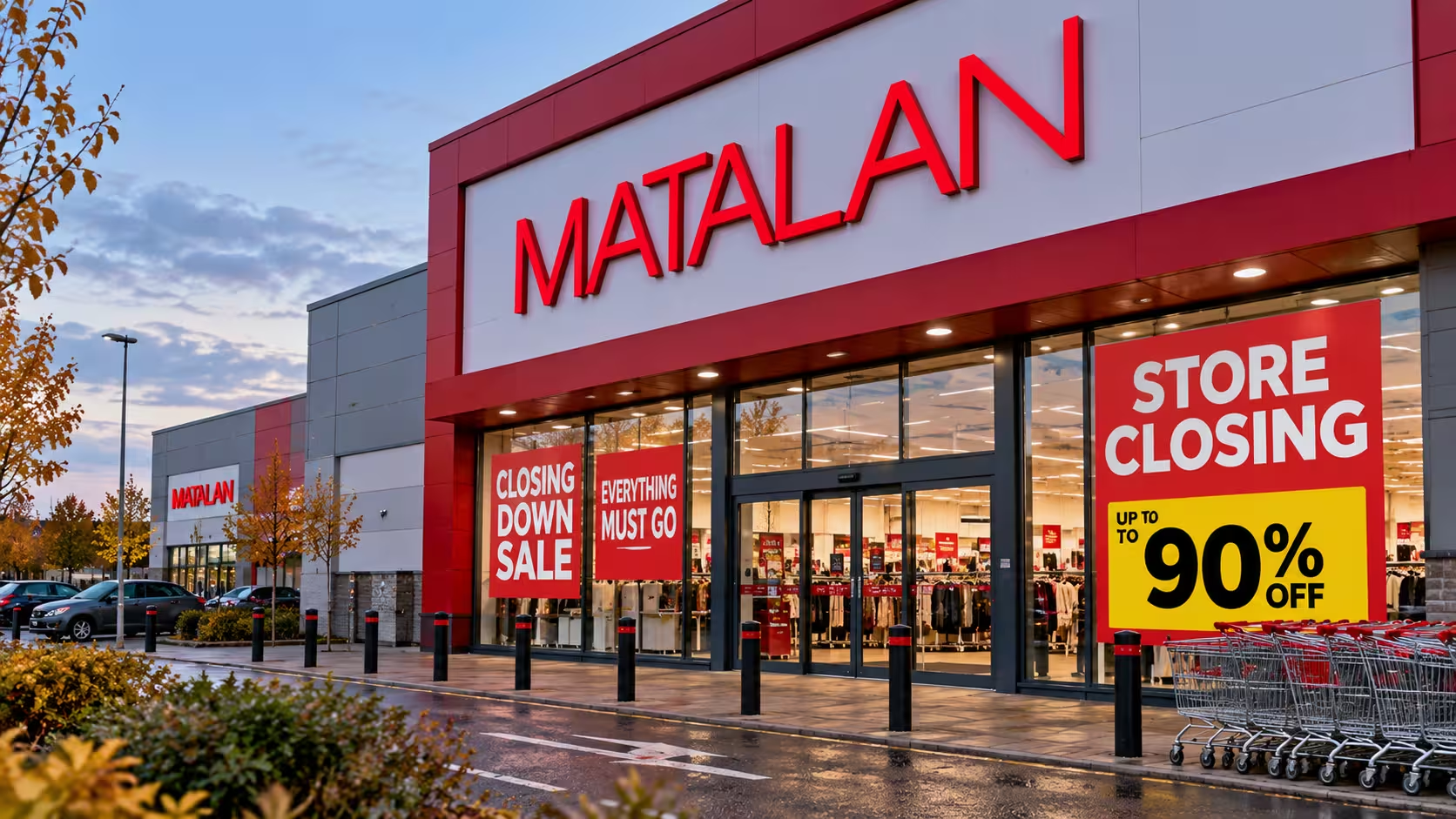
Matalan store closures have continued across the UK in 2026, with the fashion and homeware retailer permanently shutting several branches as it restructures parts of its retail estate.
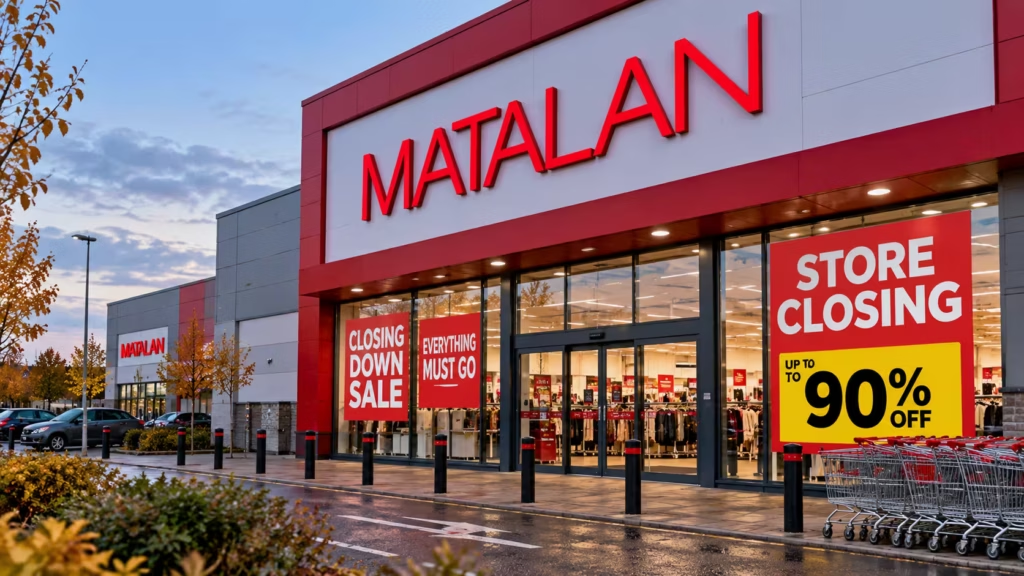
The latest confirmed closure is its Newport Clearance store in South Wales, which closed on Saturday, 24 October 2026, following a major closing-down sale offering discounts of up to 90% on selected products.
Other affected locations include Leeds, Carlisle, Colne, Sheffield and Kendal. However, the closures do not mean Matalan is disappearing from the British high street.
The company is simultaneously investing in refurbished stores, preparing new openings and attempting to strengthen its financial performance.
Our analysis of the retailer’s financial announcements, individual branch closures, property developments and wider business restructuring reveals a more complicated picture than the headlines suggest.
Is Matalan Closing Down All Its Stores in the UK?
No. Matalan is not closing all its UK stores, and there is no confirmed announcement of a nationwide shutdown.
The retailer continues to operate more than 200 UK locations alongside its online shopping business. Although several established branches have closed, the company has also announced plans to open or relocate stores and upgrade existing locations.
Matalan’s restructuring is taking place against a difficult backdrop for physical retailers. Rising operational expenditure, increased competition, changing shopping habits and the commercial viability of individual properties all influence decisions about where businesses operate.
Importantly, the closure of one branch does not necessarily indicate that the entire company is in financial collapse.
For example, the Shoe Zone store closures illustrate how retailers can reduce or reorganise their physical presence while continuing to operate other shops.
The distinction is particularly relevant to Matalan because its published business strategy involves both closing certain locations and investing in others.
What is the latest Matalan closure announcement?
The most recent confirmed closure involves the company’s dedicated clearance outlet at Seven Stiles Avenue, Newport.
Its final trading day was 24 October 2026. Before closing, the shop launched substantial discounts to sell remaining stock.
The retailer’s official store directory now identifies the Newport Clearance location as closed, while listing a new Newport Mendalgief branch as opening soon.
This means the closure represents the loss of a particular discount-store format rather than Matalan’s complete withdrawal from Newport.
Which Matalan Stores Have Closed in 2026?
Several individual Matalan branches have ceased trading during 2026. Their closure dates and circumstances vary, making it important to distinguish completed closures from proposed property changes.
| Matalan location | Final trading date | Closure status |
| Leeds – The Core Shopping Centre | 24 February 2026 | Permanently closed |
| Carlisle – Station Business Retail Park | 7 March 2026 | Closure reported and confirmed in redevelopment records |
| Colne, Pendle – North Valley Retail Park | 7 March 2026 | Permanently closed |
| Sheffield – Heeley Retail Park | 7 March 2026 | Permanently closed |
| Kendal – South Lakeland Retail Park | 7 April 2026 | Permanently closed |
| Newport – Seven Stiles Avenue Clearance Store | 24 October 2026 | Permanently closed |
These are individually reported closures, not a company-issued comprehensive list of every possible future closure. Further changes to the estate may occur as leases expire and investment decisions are made.
Some online store directories may retain historical listings after a shop has shut. For example, an official Carlisle directory entry has remained visible despite the reported March closure and redevelopment evidence. Customers should therefore check the latest branch information before travelling.
Newport Clearance Store – October 2026
The Newport closure has attracted considerable attention because the outlet specialised in end-of-season and discounted merchandise.
Located near Newport Retail Park, the approximately 41,000-square-foot store had developed a customer base among families searching for lower-priced clothing and homeware.
A closing-down sale began on 8 October with 30% off merchandise. Further reductions followed, with final-day reporting indicating discounts of up to 70% on much of the remaining stock and 90% on selected women’s swimwear.
The clearance outlet officially closed on 24 October.
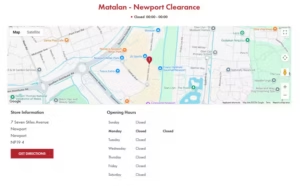
Matalan’s official Newport Clearance store listing shows the Seven Stiles Avenue branch as closed.
Carlisle, Colne and Leeds closures
Three other closures attracted attention earlier in the year.
The Leeds branch at The Core Shopping Centre ceased trading on 24 February. Carlisle and Colne closed on 7 March.
The Carlisle decision was connected to the redevelopment of the railway station area, involving a proposed southern entrance, parking and improved public space. It is therefore important not to present the closure solely as evidence of poor trading performance.
At Colne, Matalan identified Accrington and Blackburn as alternative shopping locations.
The retailer stated that its priority was supporting affected colleagues and exploring alternative roles where possible.
Sheffield and Kendal closures
The Heeley Retail Park branch in Sheffield closed on 7 March. The retail park subsequently announced plans for a padel sports facility to replace the former store.
Matalan’s Kendal branch, located at South Lakeland Retail Park on Queen Katherines Avenue, followed on 7 April.
Both closures removed established retail destinations from their respective local areas.
However, closure reports must not be confused with separate property discussions affecting other stores. Matalan’s Sheffield Parkway premises, for example, have been the subject of landlord redevelopment proposals, but the retailer stated in August that no final decision had been made about its configuration.
Why Are Matalan Stores Closing Across the UK?
There is no verified single reason covering every Matalan closure.
Individual branches may close because of lease arrangements, redevelopment, changes in property strategy or commercial considerations. Where the retailer has not publicly provided a reason, it would be misleading to identify one as confirmed.
Nevertheless, several broader factors help explain the commercial environment in which these decisions are being made.
Rising costs of operating physical stores
Large retail outlets involve considerable fixed expenditure, including rent, energy, insurance, maintenance, business rates and staffing.
A store must generate sufficient gross profit to cover these operating costs before it can contribute meaningfully to the wider business.
For example, consider a hypothetical branch generating £2 million in annual sales.
If its gross margin is 45%, it produces £900,000 in gross profit before store operating expenses.
Should annual operating costs total £950,000, the location would generate an illustrative operating shortfall of £50,000 before other adjustments.
This is not a calculation of any actual Matalan store’s performance. It demonstrates why retailers examine profitability by location rather than judging success purely through sales.
Changes in customer shopping behaviour
Fashion retailers increasingly compete across physical shops, online platforms and mobile applications.
Customers may browse products online, check availability through an app and collect their purchases from a convenient store.
Consequently, retail operators must consider whether each location provides sufficient value within their overall distribution network.
Larger stores can offer significant product choice, but they also require more space, stock and operational investment.
Matalan’s ongoing digital development and refurbishment programme indicate that it is attempting to improve how customers move between online and physical shopping.
Property redevelopment and store location
The Carlisle closure demonstrates that retail changes are not always driven entirely by consumer spending.
Commercial property decisions can also affect whether retailers retain particular sites.
Lease negotiations, access to parking, surrounding retailers, local population characteristics and redevelopment proposals can influence future investment.
Our assessment is that store closures should therefore be evaluated individually rather than automatically treated as evidence of widespread financial failure.
Is Matalan Opening New Stores Despite the Closures?
Yes. Matalan’s latest published strategy includes opening or relocating at least 10 stores and refurbishing 40 existing locations during FY27, subject to delivery of the programme.
The company completed 30 store refreshes during its preceding financial year.
One particularly relevant development is the planned opening of a new full-price store in Newport.
New Newport store planned for November
Although its clearance outlet has permanently closed, Matalan plans to continue serving Newport customers through a different location.
The new store is scheduled to open in November 2026 at:
Matalan Newport Mendalgief
1A & 1B Mendalgief Retail Park, Newport, NP20 2NS.
The company’s official directory currently describes this branch as “Opening Soon”, without giving a confirmed opening day.
Unlike the former clearance outlet, the new location is expected to provide the retailer’s regular clothing and homeware ranges.
This represents an important change in store format. Customers who previously relied on clearance-only stock should not assume that identical discounts will be available at the new branch.
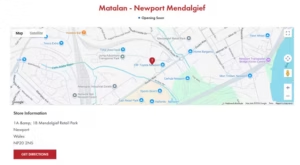
Matalan confirms a new Newport Mendalgief store is opening soon, demonstrating that the retailer is maintaining a presence in the city.
Another confirmed expansion involves Clacton, Essex, where Matalan has announced its first store at Brooke Retail Park for November 2026.
The retailer is therefore reducing its presence in some locations while seeking opportunities in others.
How Is Matalan Performing Financially in 2026?
Matalan’s latest annual financial results show improving underlying operating profitability, although the business continues to face challenges.
The company reported a narrower pre-tax loss alongside improved adjusted earnings before interest, tax, depreciation and amortisation (EBITDA).
Its full-year results, published in June 2026, provide important context for understanding the store closures.
| Financial indicator | FY26 results | Reported performance |
| Group revenue | £971.2 million | Compared with £985 million in FY25 |
| Adjusted EBITDA | £69.4 million | Increased approximately 24% |
| Gross profit | Approximately £538 million | Increased approximately 6% |
| Pre-tax loss | £54.7 million | Narrowed from £67 million |
| Capital expenditure | Increased | Approximately 171% higher |
| Refurbished store performance | Around 12% above wider estate | Positive comparative performance |
The headline revenue comparison represents a reduction of approximately 1.4%. However, FY26 contained 53 weeks compared with 52 in FY25, so these figures should not be interpreted as a directly comparable 52-week sales-growth measure.
What the financial figures reveal?
Adjusted EBITDA growth of 24% suggests that Matalan improved its underlying operational earnings before certain accounting and financing costs.
Its 6% gross-profit increase indicates improvement in the amount retained after the cost of goods sold.
The business benefited from changes in sourcing costs, freight expenses and foreign-exchange arrangements, while continuing to invest in merchandise and physical shops.
However, the pre-tax loss of £54.7 million demonstrates that the company had not returned to overall accounting profitability for the reported year.
This is the central financial distinction: increasing EBITDA does not automatically mean a business has become profitable after financing costs, depreciation and other charges.
Matalan also reported stronger trading in the first quarter of FY27, including approximately 2% revenue growth and a 45% increase in adjusted EBITDA to £14.9 million.
These improvements are encouraging, but they do not eliminate longer-term execution, borrowing or competitive risks.
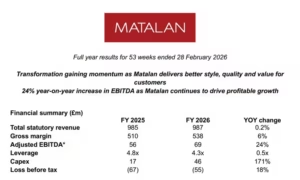
Matalan’s official corporate publications include the FY26 financial results and annual accounts, providing context for its store transformation programme.
Is Matalan Facing Financial Difficulties or Going Into Administration?
Matalan has experienced financial pressure and remains engaged in a business turnaround, but its confirmed branch closures do not establish that the retailer is entering administration.
The distinction between financial restructuring and corporate insolvency matters.
A retailer can close underperforming or strategically unsuitable locations while maintaining operations elsewhere and continuing to invest in its business.
Matalan’s ownership changed following a financial restructuring completed in 2023, with investment firms including Invesco, Tresidor, Man Group and Napier Park involved in its ownership and financing arrangements.
In March 2026, its core investors committed a further £25 million funding facility to support the transformation programme.
Then, in June, the company secured extensions to existing debt facilities until mid-2029.
Importantly, the June extension did not itself provide additional capital. Instead, it gave the retailer a longer period to manage its existing financial obligations and pursue its turnaround.
These arrangements can improve financial flexibility, but the success of the strategy ultimately depends on sustainable cash generation and commercial performance.
Our business analysis identifies three indicators worth following:
- Profitability: Whether improvements in adjusted EBITDA translate into stronger net earnings and cash generation.
- Financing: Whether the retailer can meet its obligations under existing borrowing arrangements.
- Investment returns: Whether refurbished and newly opened stores deliver sufficient profit to justify their capital costs.
For retailers, improvements across all three areas are more meaningful than the number of shops remaining open alone.
Who Is Leading Matalan’s Business Restructuring?
The company’s management structure changed during August 2026.
Henrik Nordvall, who had joined as chief executive earlier in the year, departed following an agreement with the board.
Matalan subsequently appointed Karl-Heinz Holland as permanent Executive Chair, working alongside the retailer’s executive leadership team.
Holland previously held senior positions at Lidl and Takko Fashion, giving him experience in value-focused retail operations.
Following the leadership change, Holland stated:
“We have a clear strategy, strong momentum and a significant opportunity ahead of us.”
His published comments emphasised maintaining the business’s focus on everyday style, quality and value while strengthening its long-term commercial position.
The management change is significant because the retailer is attempting to improve trading performance while continuing a substantial investment programme.
Investors, suppliers and commercial property partners will be watching whether the new leadership arrangement provides operational continuity.
What Does Matalan’s £25 Million Investment Mean for Its Stores?
The retailer’s additional £25 million funding commitment is intended to support investment in products, physical shops and digital capabilities.
The investment strategy is particularly important because the business has reported a positive relationship between store refurbishment and trading performance.
Matalan stated that refreshed locations outperformed the wider store network by approximately 12%, while delivering post-refurbishment like-for-like sales growth of around 10%.
These figures suggest that upgrading successful locations may produce stronger commercial results than maintaining an entirely unchanged store portfolio.
However, these percentages represent different measurements and should not be combined into a single overall growth rate.
The company’s plans include improved store layouts, clearer merchandising, more efficient checkout arrangements and enhanced shopping facilities.
From a financial perspective, the purpose of such investment is to increase sales productivity, improve customer retention and generate a satisfactory return on capital.
Matalan’s corporate reporting also indicates that more than 80% of group revenue is generated through its UK store estate.
That makes physical retail performance central to the company’s future, even as online shopping grows.
How Could Matalan Store Closures Affect Employees?
Branch closures can create significant uncertainty for retail employees, particularly in towns where opportunities with comparable employers are limited.
Matalan has said that supporting colleagues and exploring alternative positions are priorities when affected shops close.
However, it has not publicly provided a complete verified figure for employees losing their jobs across all the closures discussed here.
It would therefore be inaccurate to assume that every employee working in a closed branch has been made redundant.
Possible outcomes include redeployment, contractual changes, voluntary departures or redundancy, depending on individual circumstances.
Under UK employment law, eligible employees may be entitled to redundancy consultation, notice and statutory redundancy payments.
The precise requirements depend on factors including employment status, length of service, contractual arrangements and the number of proposed redundancies.
For affected employees, official guidance on redundancy rights explains the applicable protections.
Closures can also affect nearby retailers, cleaning contractors, logistics businesses and suppliers that depend on the activity generated by an established store.
What Do Matalan Store Closures Mean for the British High Street?
The Matalan closures reflect wider changes in the economics of physical retail, although the company-specific reasons vary between locations.
For decades, fashion and homeware retailers have relied on large stores to offer broad product selections and attract customers seeking convenience.
Today, businesses face additional pressure to improve productivity across their physical and digital operations.
That means retailers may continue investing in profitable locations while withdrawing from premises that no longer match their commercial requirements.
The contrast with the Quadrant department store closure is instructive. Quadrant permanently ended its department-store operation, whereas Matalan continues trading nationally and pursuing new store investment.
These are different business circumstances, despite both appearing in headlines about high-street closures.
There is also a local economic dimension.
Losing a substantial clothing retailer may reduce shopping choice, particularly where alternative outlets are some distance away. Customers visiting the former store may also have supported cafés, supermarkets and other neighbouring businesses.
However, a replacement tenant or redevelopment project can create different commercial opportunities.
In Sheffield, the planned conversion of the former Heeley store into a leisure facility illustrates how retail parks can adapt to changing customer demand.
The long-term effect on an area depends on the incoming occupier, employment opportunities, visitor numbers and wider commercial activity.
Are More Matalan Store Closures Expected in 2027?
Further changes to Matalan’s physical estate are possible, but a nationwide list of confirmed 2027 closures has not been announced.
One location attracting attention is Worksop, Nottinghamshire.
Reports published in 2026 highlighted uncertainty surrounding the future of its Eastgate store because of an approaching lease expiry and a redevelopment proposal involving Home Bargains operator TJ Morris.
The proposals involve replacing the existing building with another retail unit.
However, the presence of a planning application or an approaching lease expiry should not be treated as confirmation that Matalan has permanently closed the store.
Similarly, discussions about the configuration of the Sheffield Parkway premises have not established a confirmed final closure date.
For both locations, a formal retailer announcement or a reliable subsequent operating-status update is needed before reporting a permanent shutdown.
The possibility of more individual changes must also be balanced against the retailer’s investment in openings, relocations and refurbishments.
What Should Matalan Customers Do if Their Local Store Has Closed?
Customers affected by branch closures can continue shopping through the retailer’s national store network or its online platform.
The most useful immediate step is to confirm the status of the nearest alternative branch.
Matalan provides an official store finder where customers can search by town or postcode.
Before visiting, customers should check:
- Whether the branch is operating and its current opening hours.
- Whether Click & Collect services are available.
- Whether a particular product is stocked at that location.
- Whether returns can be processed for the type of purchase involved.
Can customers still return purchases from a closed branch?
Matalan’s standard returns policy generally permits eligible refunds within 28 days, subject to the relevant purchase conditions and exclusions.
However, clearance stores have different restrictions, and Matalan states that returns cannot be made to its clearance stores.
Customers who purchased goods during a closing-down sale should check the applicable conditions, particularly where a purchase involved clearance merchandise or special promotional arrangements.
Legal rights concerning faulty or misdescribed goods are separate from a retailer’s voluntary change-of-mind returns policy.
The company’s official returns and cancellations policy provides the applicable procedures.
What Is the Future of Matalan in the UK?
Matalan’s future will depend on whether it can turn recent improvements in operational earnings into sustainable profitability and cash generation.
The company’s latest financial results provide reasons for cautious optimism, including stronger adjusted EBITDA and positive performance from refurbished stores.
Yet the continuing pre-tax loss, competitive retail environment and financing requirements remain important considerations.
Our assessment of its published business strategy suggests that Matalan is concentrating on a more productive combination of stores, merchandise and digital services rather than pursuing uninterrupted expansion.
That may involve further closures where individual locations no longer meet commercial requirements, alongside investment in stronger sites and new markets.
The upcoming Newport and Clacton openings will provide visible examples of the next phase of its strategy.
Successful execution would demonstrate that the retailer can replace or improve parts of its estate while maintaining the convenience and value that customers associate with the brand.
Conversely, weaker sales, disappointing refurbishment returns or renewed financial pressure could force the company to reconsider the pace of investment.
At present, neither outcome should be treated as certain.
Final Thoughts
The Matalan store closure news highlights the difficult decisions facing established British retailers as they attempt to balance rising costs, changing consumer behaviour and financial recovery.
Six individual branches have been identified in confirmed 2026 closure reporting, with Newport Clearance becoming the latest to shut on 24 October.
However, the company’s plans for new stores, 40 refurbishments and further investment show that it is not abandoning physical retail.
With adjusted EBITDA rising 24% in FY26 and a further improvement reported in the following quarter, Matalan has made measurable progress in its turnaround. Its continuing pre-tax losses nevertheless show that the recovery remains unfinished.
For customers, employees and commercial partners, the most important developments will be the performance of newly refurbished locations, the success of forthcoming openings and the retailer’s ability to sustain stronger financial results.
Matalan is closing selected stores, not closing its entire UK business.
Frequently Asked Questions
Is Matalan shutting down permanently?
No. Matalan continues to operate more than 200 UK stores and has plans for further openings and refurbishments. The announced closures concern individual branches rather than the entire chain.
Which Matalan store closed most recently?
The latest confirmed closure covered here is the Newport Clearance store on Seven Stiles Avenue, which ceased trading on 24 October 2026.
Why did Matalan close its Newport Clearance store?
Matalan confirmed the closure but did not publicly provide a definitive reason for the decision. A new full-price branch is scheduled to open at Mendalgief Retail Park in November.
Did Matalan close its Kendal store?
Yes. The Kendal store at South Lakeland Retail Park permanently closed on 7 April 2026.
Is Matalan in administration?
There is no confirmed announcement that Matalan has entered administration. The retailer continues trading and implementing its financial and operational turnaround strategy.
Will Matalan open new shops in 2027?
The company has announced a programme of new or relocated stores and refurbishments for FY27. Individual future openings and dates remain subject to confirmation.
Can customers still shop online after a local closure?
Yes. Matalan’s website and other operating branches remain available. Customers should check delivery, collection and returns arrangements before ordering.